

Depth | Jungian Psychotherapy
Inner Alchemy: Speaking the Language of the Unconscious
Instead of asking only, “What’s wrong?”, Jungian-informed therapy asks “What is trying to emerge?”
Therapy is a dialogue between your conscious self and the deeper mind that speaks in the language of dreams, images, signs, synchronicities, and emotions. The inner terrain of our inner worlds - with its shadows, treasures, and untapped potential - holds the map of greater wholeness.

Depth Psychology: An Integrated Approach to Healing
Depth-oriented psychology, founded by Carl Gustav Jung, offers a profound path toward healing trauma, navigating grief, and reconnecting with your authentic self. Unlike symptom-focused approaches, Depth-oriented therapy explores the unconscious, dreams, archetypes, and the deeper layers of the psyche to foster lasting transformation.
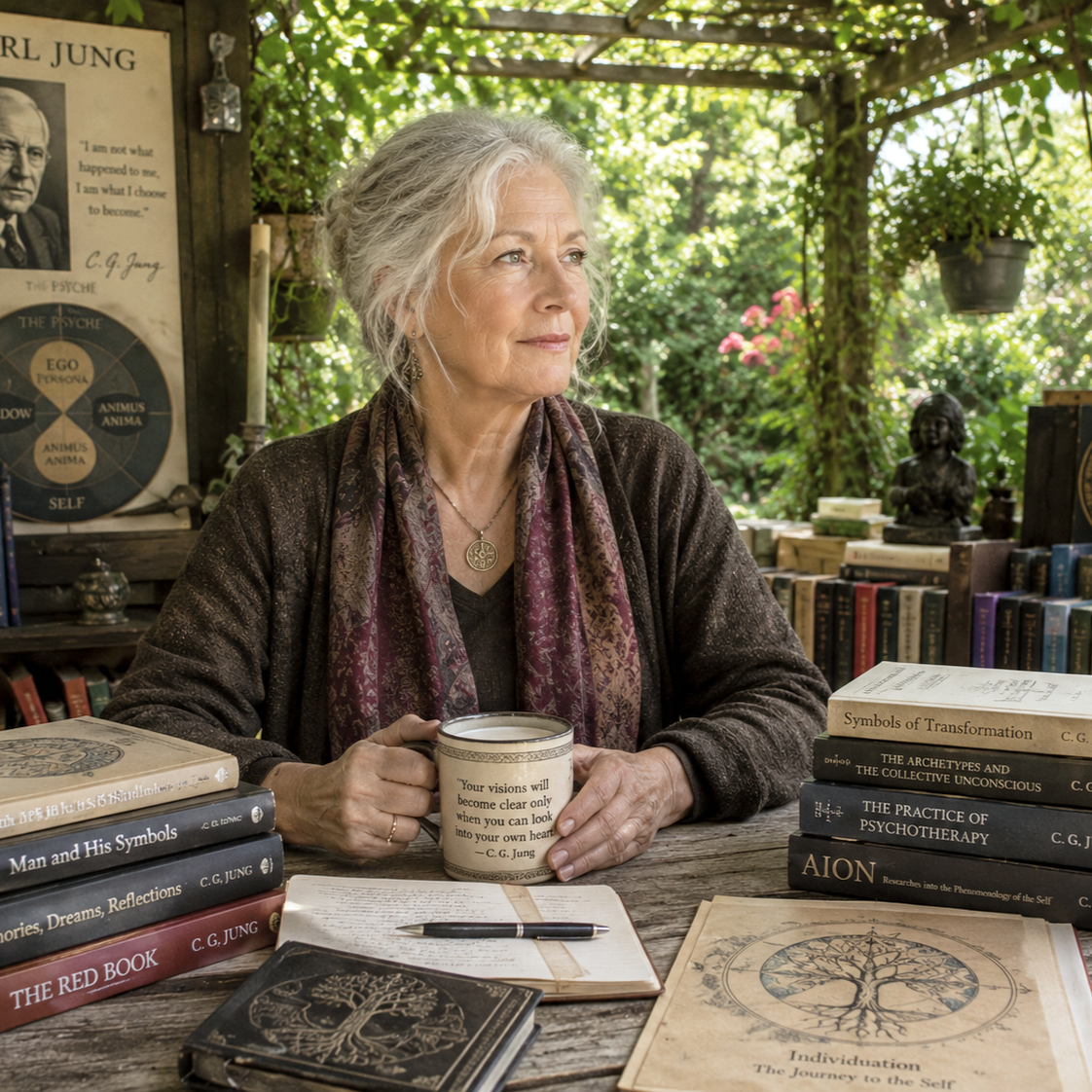
As a holistic, I integrate Jungian depth work with trauma-informed care to support individuals experiencing:
Childhood trauma and attachment wounds
Complicated or disenfranchised grief
Deconstruction
Identity transitions and life crossroads
Anxiety, depression, and existential distress
Personal growth and self-discovery
This work is not about “fixing” you. It’s about remembering who you truly are. This approach to therapy explores patterns, emotional experiences, and personal meaning. The central focus of therapy is to develop insight and understanding rather than symptom management. Together, we may explore:
recurring emotional and relational patterns
dreams, synchronicities, images, and symbolic experiences
inner conflicts and the “shadow” aspects of self
identity, purpose, and personal growth
By bringing unconscious material into awareness, we create the opportunity for self-understanding, emotional integration, and a stronger sense of authenticity.
What Is Jungian Psychology?
Jungian psychology is rooted in the understanding that healing happens through integration, not suppression. Core principles include:
The Shadow
The shadow represents the parts of ourselves we’ve disowned or hidden. Trauma often pushes essential parts of us into the unconscious. Through gentle, compassionate exploration, we reclaim these parts and restore wholeness.
Archetypes
Jung observed universal patterns of experience—archetypes—that shape our inner and outer lives. These patterns influence relationships, grief journeys, spiritual awakenings, and personal growth.
Individuation
Individuation is the lifelong process of becoming your true self. It involves integrating conscious and unconscious aspects of your psyche so you can live with greater clarity, meaning, and authenticity.
What to Expect in a Session
Depth-oriented therapy can feel quite different from more structured, solution-focused approaches. This type of therapy tends to move at a slower, more exploratory pace and focus on meaning as much as symptom relief. Here’s what you can generally expect:
Pace and Structure. Sessions are usually open-ended rather than tightly agenda-driven. We might begin by talking about what feels most present for you (i.e. your thoughts, emotions, memories, or even fragments). Silence is not unusual; it’s often used as space for reflection rather than something to “fill”
Focus on the Unconscious. We may explore synchronicities, dreams, and recurring images. We will probably talk about symbols or patterns rather than just events. Connections between past and present experiences are gradually uncovered.
Exploration over Quick Solutions. Instead of immediate coping strategies, this work emphasizes understanding underlying dynamics. We will likely revisit themes over time, each time from a slightly deeper or different angle. Insight is seen as a key part of change, though it unfolds gradually
Emotional Depth. Sessions can bring up complex or unexpected feelings (i.e. grief, anger, fear, relief, even contradiction. You can expect an emphasis on staying with emotions long enough to understand them, not just regulate them. Difficult material is approached carefully, at a pace that feels manageable.
The Therapeutic Relationship. Our relationship itself is a central part of the work. You might notice patterns (trust, avoidance, dependence, etc.) showing up in our relationship. Exploring those patterns can offer insight into other relationships in your life.
Longer-term orientation. This is often not brief therapy; it can unfold over months or longer, Progress may feel nonlinear. Periods of clarity may be followed by confusion. Over time, people often report a stronger sense of identity, meaning, and inner coherence.
Grief

Depth psychology offers a way to approach grief that goes beyond “moving on” and instead emphasizes meaning, transformation, and relationship with the unconscious.
Jungian grief work recognizes that loss can reshape your life and identity. You may benefit from this approach if you have experienced:
death of a loved one
loss of a relationship
deconstruction
shifts in identity
Grief is not seen as a problem to be solved. Instead grief is seen as a deeply transformative and sacred experience.
Grief - A Jungian Perspective.
Grief is the normal and nature reaction to loss. It is not something to “fix” but something to engage: Grief is a natural, necessary process that carries psychological meaning rather than a problem to eliminate.
The psyche seeks wholeness. Loss can activate deeper layers of the unconscious, inviting a person into a process of inner growth and self-understanding.
Symbols, synchronicities, and dreams matter. Grieving individuals may experience vivid dreams, memories, synchronicities, or symbolic imagery, which can serve as a bridge between conscious awareness and unconscious material.
Continuing bonds are valid. Instead of detaching from the deceased, Jungian thought allows for an ongoing inner relationship through memory, imagination, and symbolic connection.
Archetypes can shape the experience. Universal patterns (i.e. death, rebirth, the underworld journey, or transformation) can help frame grief as part of a larger human story.
Suffering can be transformative. While painful, grief can lead to a reorganization of identity, values, and purpose, contributing to what Jung called individuation (the process of becoming one’s fuller self).
Ritual and meaning-making are essential. Personal or cultural rituals can help contain grief and give it form, making the experience more bearable and integrated.
The shadow may emerge. Grief can bring up unexpected emotions like anger, guilt, or relief; acknowledging these without judgment is part of psychological integration.
Time is not linear. Healing does not follow a simple timeline; grief may recur in cycles, each time revealing new layers of meaning.
Trauma | PTSD

Trauma fragments the psyche. You may feel disconnected from your body, emotions, faith, or sense of identity.
Depth (Jungian) psychology offers a framework for understanding trauma and PTSD that emphasizes meaning, integration, and the healing potential of the psyche. You may benefit from this approach if you have experienced a traumatic event and notice the following:
extreme emotional reactivity (i.e. rage)
avoidance of any reminders of the trauma (i.e. people, places, things, etc.)
hypervigilance (being on “high alert”)
persistent negative beliefs about yourself or others
flashbacks, nightmares, and intrusive memories
physical reactions, such as sweating, rapid breathing, fast heartbeat or shaking.
difficulty sleeping, concentrating, memory problems
feeling detached or numb
Trauma - A Jungian Perspective.
Trauma is not only an event but an experience in the psyche. Depth psychology focuses on how overwhelming experiences fragment inner life, often pushing material into the unconscious rather than fully processing it.
Symptoms have meaning, not just pathology. Intrusive thoughts, nightmares, and emotional triggers can be understood as attempts by the psyche to process and integrate unresolved material.
The unconscious communicates through images and symbols. Dreams, synchronicities, fantasies, and creative expression can provide insight into traumatic material in ways that feel safer and less direct than verbal recall.
Healing involves integration, not erasure. The goal is not to “get rid of” trauma but to gradually bring dissociated parts of the self into conscious awareness and relationship.
The shadow plays a central role. Trauma often carries emotions like rage, shame, or fear that are pushed away; acknowledging and integrating these shadow elements is key to recovery. This approach honors your protective parts without pathologizing them through compassionate shadow integration.
Archetypal patterns can provide structure. Experiences of trauma may resonate with universal themes—such as descent, chaos, survival, and rebirth—helping individuals feel less isolated and more connected to a shared human story.
The therapeutic relationship matters deeply. A safe, attuned relationship can act as a container where unconscious material emerges and is processed without overwhelming the individual.
The body and psyche are connected. Nervous system regulation is supported. Trauma is not just mental; depth-oriented approaches often recognize the importance of bodily awareness and sensation in healing.
Creative expression supports processing. Art, journaling, and active imagination allow symbolic exploration of trauma when words are insufficient.
Healing is nonlinear and personal. Recovery unfolds in cycles, often revisiting themes at deeper levels, aligned with the broader process of individuation—becoming a more whole and integrated self.
Deconstruction & Identity Shifts

Depth | Jungian therapy offers a grounded, psychologically rich way to navigate deconstruction (whether of beliefs, identity, or worldview) as a meaningful inner process rather than just a loss of certainty. You may benefit from this approach if you are experiencing
guilt or shame for questioning what once felt unquestionable
Anxiety or fear tied to the unknown or “what comes next”
identity confusion: “Who am I without this framework?”
A pull toward deeper authenticity and self-definition
Re-evaluating lifestyle choices to align with evolving beliefs
Strain or conflict with family, friends, or community members
Feeling misunderstood, isolated, or “in between” worlds
Questioning previously held beliefs about truth, meaning, or the divine
Questioning previously held beliefs about truth, meaning, or the divine
Deconstruction & Shifts in Identity - A Jungian Perspective.
Deconstruction as a psychological process that can create generational change. From a Jungian lens, questioning inherited beliefs often reflects a deeper shift in the psyche, not merely a change in opinions.
The collapse of old structures creates space for the self. When familiar frameworks fall apart, it can feel disorienting—but this “inner breakdown” can open the way for new, more authentic forms of meaning.
The unconscious becomes more active. As conscious belief systems loosen, dreams, synchronicities, symbols, and emotional responses may intensify, offering guidance from deeper layers of the psyche.
The shadow emerges more clearly. Letting go of rigid systems can reveal previously suppressed doubts, desires, or contradictions; engaging these honestly supports integration rather than fragmentation.
Archetypal themes provide orientation. Experiences of descent, exile, death, and rebirth can help frame deconstruction as part of a universal human pattern of transformation rather than a personal failure.
Individuation becomes central. Jung saw psychological growth as the process of becoming one’s true self. Deconstruction can be a crucial phase in this journey, where external identities give way to inner authority.
Ambiguity and paradox are necessary. Depth psychology encourages holding tension between opposites rather than rushing to new certainties, allowing more complex and resilient perspectives to form.
Meaning is discovered, not impose. Instead of replacing one rigid system with another, Jungian work supports a gradual, personal construction of meaning rooted in lived experience.
Ritual and symbolic acts can stabilize the transition. Creating personal practices or marking transitions can help contain the uncertainty and give shape to the process.
The process is nonlinear and ongoing. Deconstruction doesn’t “end” neatly; it unfolds in cycles, with periods of clarity and confusion that both contribute to deeper psychological integration.

"Until you make the unconscious conscious, it will direct your life, and you will call it fate” C. G. Jung

The Benefits of Depth Therapy
Clients often experience:
Increased self-trust and inner clarity
Reduced anxiety and shame
Greater emotional resilience
Healthier relationships
Integration of beliefs/values and identity shifts
Renewed purpose and meaning
This is deep, liberating work.

Is Jungian Therapy Right for You?
This approach may be helpful if
You want to understand the roots of your struggles.
You are looking for a reflective and intuitive approach to growth.
You feel stuck in repeating patterns.
You are navigating grief or another deeply transformative life experience.
You long for therapy that honors your whole self.
You are searching for a pathway to explore and integrate a spiritual or existential awakening.
You are seeking deep self-exploration and personal meaning.
You’re ready for transformative, insight-oriented work.
This is approach is especially well-suited for you if you are curious, introspective, and interested in understanding yourself on a deeper level. If you’re seeking quick symptom management only, this approach may feel slower. But if you’re ready for lasting depth and integration, you may find this work profoundly supportive.
Take the first step today.
Healing is not about becoming someone new. It’s about becoming more fully yourself.
If you’re ready to explore Jungian therapy for trauma, grief, personal growth, or deconstruction, I invite you to reach out. Schedule a consultation today and begin the work of integration, wholeness, and authentic living.